
Senegal Is Building a Space Future. The Opportunity Is Bigger Than Satellites
Two years after GAINDESAT-1A reached orbit, the larger question is what Senegal builds beneath its satellites.
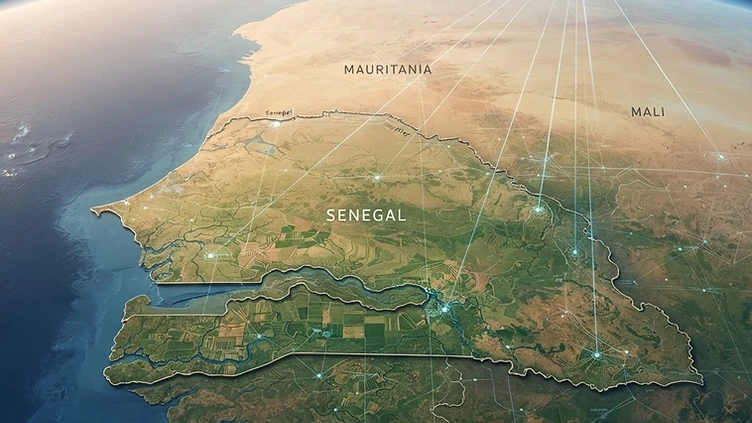
Senegal's SENSAT program and Africa's wider space push raise a larger question: what ecosystem can the country build around its satellites?
On 16 August 2024, Senegal placed its first satellite into orbit. GAINDESAT-1A, an Earth-observation nanosatellite, launched from Vandenberg Space Force Base in California aboard a Falcon 9 rocket, the first on-orbit milestone of the country's national space program, known as SENSAT.
Two years on, the launch matters less as a symbol than as a starting point. The more consequential question is what Senegal builds around its emerging space capabilities, and whether they can become skills, services and economic opportunity rather than a single achievement to celebrate.
That question is sharpened by how quickly the rest of the continent is moving. Reporting by the Financial Times in August 2026 highlights a continent accelerating its investment in space. Senegal is part of that wave, pursuing additional satellite capabilities including a reported proposal for a constellation of between six and 12 satellites. Set against the broader African expansion, the issue is not only how many satellites Senegal can launch, but what ecosystem it can build beneath them.
Space Technology With Practical Uses
Satellite technology is often discussed as if its value were somewhere above the atmosphere. In practice, most of it is felt on the ground.
Earth-observation satellites can support agricultural monitoring, helping track crop conditions and land use. They can contribute to environmental observation and coastal monitoring, both relevant for a country with a long Atlantic seaboard and low-lying areas exposed to erosion and flooding. Data from orbit can inform flood and disaster preparedness, geographic and infrastructure planning, and climate resilience. Satellite connectivity also matters for extending telecommunications to underserved areas.
Senegal's SENSAT program was conceived with such uses in mind, including water-resource management and environmental monitoring. Where programs are operational, they should be described as such. Where applications remain planned or prospective, they are better understood as potential uses of the technology than as established services. The distinction matters because the value of satellite data depends on whether institutions on the ground can use it, and whether Senegal builds the capacity to do so.
The Bigger Opportunity: Building Skills
A functioning space and geospatial ecosystem requires more than hardware. It depends on people: engineers and software developers, data scientists, geospatial and GIS specialists, researchers, telecommunications specialists, Earth-observation analysts and entrepreneurs.
That human dimension connects directly to Senegal's broader priorities. In August 2026, a Dakar forum on employment and entrepreneurship (F2E) focused on economic transformation and the role of productive employment and entrepreneurship. It raised a question that applies neatly to the space sector: can national ambitions also become a pipeline for high-skilled employment, research and entrepreneurship?
The honest answer is that the ecosystem is still early. Reliable evidence does not yet show large numbers of space-sector jobs created in Senegal. What can be said is that a deliberate effort to build geospatial and space-adjacent skills could expand the range of opportunities available to young Senegalese, from data analysis and software to applied research and services. The opportunity is real, but it is conditional on investment in training and institutions.
A Role for the Diaspora
Senegal's global professional network is one of its underused assets in this conversation. Senegalese professionals abroad, in engineering, data science, aerospace, research and finance, could contribute to a nascent space and geospatial ecosystem in several ways: university partnerships, research collaboration, technical mentorship, knowledge transfer, startup collaboration, professional networks, training, and investment and entrepreneurship.
These are possibilities, not established programs, and none should be presented as a current government initiative. The broader point is that a space economy is knowledge-intensive, and Senegal's diaspora represents a reservoir of expertise that could help close the distance between ambition and capability, if it is deliberately engaged.
From Space Program to Space Economy
Senegal is not building in isolation. The African Space Agency (AfSA), inaugurated by the African Union on 20 April 2025 and headquartered in Egypt, gives the continent a shared institutional focal point. Nearly 20 African countries now have satellites in orbit, and African governments are expected to collectively allocate more than $800 million to space projects in 2026, roughly twice the level of two years earlier.
Measured against that backdrop, launching satellites should not be the only measure of success. A stronger long-term measure is whether these capabilities eventually translate into better information and services, agricultural productivity, climate resilience, scientific research, technology companies, skilled employment and concrete opportunities for young Senegalese.
The satellite may be built for orbit. The real opportunity is what Senegal builds around it.
Sources & Further Reading
- 01.Financial Times
African nations join the space race
- 02.UN-SPIDER (UNOOSA)
Senegal Successfully Launches First Satellite: Gaindesat-1A
- 03.Space in Africa
Senegal to Expand Space Capabilities with GAINDESAT-1B Launch in 2026
- 04.Wikipedia
GaindéSat-1A
- 05.African Space Agency (AfSA)
African Space Agency
- 06.RTS
F2E 2026 : Le Sénégal mise sur l'emploi et l'entrepreneuriat
- 07.African Leadership Magazine
Africa Reaches For The Stars: How Satellites Are Transforming Life On The Ground
Related Stories

Who Builds, Who Buys: Senegal and the New Economics of Artificial Intelligence
An in-depth investigation into Senegal's structural position in the global AI economy, the paradox of its world-class talent, the gap between announced ambition and deployed capacity, and whether the country can move from consuming the technologies of the future to helping create them.

Senegal Has Put Starlink on Hold. The Real Fight Is Over Who Connects the Country
Senegal's Supreme Court provisionally suspended Starlink's operating authorization on September 7, after a challenge by Sonatel, the incumbent that paid 134.5 billion CFA francs in license and spectrum fees. The ruling is not a revocation — but it puts a question the country can no longer avoid: who should pay to connect Senegal, and under what rules?

Moustapha Cissé Could Have Stayed in Big Tech. He Chose to Build in Africa.
A Senegalese AI researcher who led Google's first Africa lab and founded the continent's first AI master's program is now building a health-insurance company in Dakar. His career asks a larger question about whether Africa can stop merely exporting talent and start compounding it at home.
Guidance
Looking for guidance?
Connect with experienced Senegalese professionals across industries and continents.
Find a Mentor