
Who Builds, Who Buys: Senegal and the New Economics of Artificial Intelligence
Global powers are spending hundreds of billions to control the infrastructure of AI. Senegal has a strategy, real talent, and growing ambition. Whether that adds up to participation or dependence is the question this report investigates.

Senegal has published a national AI strategy, launched two research laboratories, seeded a startup fund, and outlined a planned investment of 1,105 billion CFA francs, roughly $1.8 billion, over a decade-long digital transformation programme. Senegal is not standing still. The harder question is whether the pace and structure of what it is building can keep up with a global technology race whose economics are becoming more concentrated, not less, with every passing quarter.
In 2025, the four largest American hyperscalers, Microsoft, Google, Meta and Amazon, spent a combined total of roughly $410 billion on capital expenditure, according to each company's full-year results, though they do not all report on the same basis. Amazon's $131.8 billion and Alphabet's $91.4 billion are cash capital expenditure, purchases of property and equipment that exclude finance leases, while Meta's $72.2 billion includes principal payments on finance leases. Microsoft, which reports on a fiscal year ending in June and also includes finance leases in its capital expenditure, spent roughly $115 billion in calendar-year terms. The combined figure is an approximation across mixed reporting bases, and it spans all of their capital spending, not artificial intelligence alone. NVIDIA's data center revenue reached $193.7 billion in its fiscal year 2026, which ended in January 2026, and $89 billion in the quarter ending July 26, 2026, per the company's own investor disclosures. China established a state-backed semiconductor investment fund of $47.5 billion in 2024, the third phase of its Integrated Circuit Industry Investment Fund and part of a wider push to control the advanced computing technologies on which AI depends. The United States authorized $52.7 billion for semiconductor programmes through the CHIPS and Science Act, of which the Department of Commerce administers about $50 billion, including $39 billion in manufacturing incentives and $11 billion for research and development, disbursed over time as companies meet milestones. Gartner forecasts cumulative AI infrastructure spending could reach $6 trillion by 2030. These are not merely large numbers; they describe a geography. The computing power required to train and run frontier AI systems is overwhelmingly concentrated in two countries, and the gap between that concentration and everywhere else is widening in proportion to the capital being deployed.
Africa as a continent accounts for roughly 0.6 percent of the world's installed data center capacity, according to the Africa Data Centres Association's 2026 industry report, a measure of physical infrastructure that does not by itself describe a country's artificial intelligence capability. The ITU estimates that 38 percent of Africa's population used the internet in 2024. West and Central Africa together account for just 0.31 percent of global AI startups and less than one percent of global AI scientific publications, according to a 2025 World Bank report. Morocco alone is projected to account for 55 percent of upcoming African data center power capacity, according to ResearchAndMarkets.
Senegal's figure is higher: 60 percent of its population used the internet at the start of 2024, according to DataReportal's Digital 2024 Senegal report. Both figures measure the share of the population using the internet, which places Senegal meaningfully above the continental average but not yet at universal access. Fixed broadband remains expensive: the ITU recorded its cost at 17.8 percent of gross national income per capita in 2022, a figure that prices out a large share of the population and most small businesses from reliable high-speed access.
The Strategy and the Gap Between Words and Infrastructure
Launched on February 24, 2025, Senegal's New Deal Technologique carries an announced investment envelope of 1,105 billion CFA francs, approximately $1.8 billion, over the 2025 to 2034 period, according to Senegal's presidency and the International Trade Administration. It targets 150,000 new technology jobs and 500 new tech startups by 2034, and includes a sovereign cloud infrastructure, an XRoad national interoperability platform for government services, a Senegal Digital Factory designated to produce and export technologies in AI, cloud and robotics, and the planned Cluster Sénégal IA, an initiative to aggregate public and private data and coordinate AI research. The government's 2026 digital budget, set at 81.06 billion CFA francs by the Ministry of Communications, Telecommunications and Digital, allocates 60 percent to investment rather than recurrent costs, per TechAfrica News. A consortium led by Cybastion is deploying $300 million for data centers and cybersecurity infrastructure. Stellarix, part of Axian Group, is expanding data center capacity in Senegal to support sovereign cloud services; the $730 million the group has drawn from development finance institutions since 2025, including the IFC, funds Axian's wider expansion across Africa rather than Senegal alone, according to Billionaires.Africa.
Those are real commitments. But the dossier on which this report is based documents a gap that policymakers and investors should not paper over: no verified disbursement figures for the 1,105 billion CFA franc envelope exist in public sources; actual data center capacity in megawatts within Senegal is not publicly available; and the Digital Factory's assembly complex is not due to begin operations until December 2026. The difference between an announced strategy and deployed, operational infrastructure is not a technicality. It is the difference between a country that has a plan and a country that has capacity.
What Senegal's AI Laboratories Tell Us About Local Ambition
Amid the policy architecture, two kinds of evidence matter most: what Senegalese institutions have actually built, and what researchers have actually published. One of the most concrete structural gaps in global AI is the near-total absence of quality training data and functional models for the hundreds of millions of people who communicate primarily in Wolof, Pulaar, Mandinka and other languages almost invisible to frontier model developers. The commercial opportunity is significant: developing reliable natural language processing for West African languages could allow Senegalese innovators to serve markets that remain underserved by the world's largest AI developers.
At the research level, two multidisciplinary laboratories launched on January 31, 2025, DiCentre4AI at Cheikh Anta Diop University and ALIVE at Cheikh Hamidou Kane Digital University, represent an attempt to build institutional infrastructure for AI inquiry rather than rely on individual researchers working in diaspora institutions, though institutional establishment is not the same as demonstrated output. The UniPod at Diamniadio, a university innovation and technology hub run with the United Nations Development Programme, was inaugurated on April 27, 2026, in the same ceremony that formally launched the Senegal Digital Factory. That launch was a policy milestone rather than an operational one: an agreement covering the factory's digital equipment assembly complex at Diamniadio was signed on October 6, 2026, and the site is not scheduled to begin operations until December 2026. Dr. Seydina Moussa Ndiaye, a senior lecturer at Cheikh Hamidou Kane Digital University, co-authored the African Union Development Agency white paper on AI development, bringing Senegalese academic perspective into continental policy frameworks, as reported by Deutsche Welle. Sen Hub IA operationalized the National AI Strategy over a two-year period, according to the Ministry of Telecommunications and Digital.
What these examples share is an orientation toward local context: language, governance, agricultural supply chains, public health infrastructure. That orientation is not a consolation prize for countries that cannot build frontier models. It is a genuine strategic bet, but only if it is matched by computing access, stable funding and the institutional continuity to turn early research into deployable products.
What Other Countries Did and What It Cost Them
Kenya's experience is instructive on both the upside and the limits of ambition. Its Silicon Savannah initiative and aggressive tax incentives for tech startups turned Nairobi into a regional hub for technology companies and venture investment. In December 2025, Kenya published a formal AI implementation roadmap. Microsoft and G42 announced a $1 billion investment in Kenyan cloud and AI infrastructure, per Africa at LSE. Yet Kenya still lacks control over the highest-value parts of the AI stack, and data labelers working for AI training firms in Nairobi earn between $1.32 and $2 per hour, according to Techmoonshot, a reminder that being embedded in the global AI supply chain is not equivalent to capturing its economic value.
Rwanda partnered with GIZ and the World Economic Forum around a $589 million AI ecosystem vision, per Just Security, and aligned its initiatives with Vision 2050 workforce planning, achieving rankings that position it as one of Africa's most business-friendly environments for technology. Its remaining challenge is a domestic market too small to sustain scale without export orientation.
Nigeria has produced high AI research output relative to regional peers but its implementation remains fragmented compared to Kenya's roadmap approach, according to Just Security. India's trajectory is the most studied: by building the India Stack, a public digital infrastructure layer for identity and payments, it enabled billions of monthly UPI transactions and eventually supported a domestic AI innovation push through government-backed compute, per the OECD. India's remaining divide between urban and rural digital access is, notably, a problem Senegal shares.
The common thread is that none of these countries built frontier models. What distinguished the more successful ones was institutional focus: clear sectoral priorities, the patience to build interoperable infrastructure, and mechanisms to connect local talent to local capital.
The Talent Paradox and What to Do With It
Senegal has produced researchers of global standing, including Moustapha Cissé, whose contributions to AI research at institutions in Europe and North America are well documented, though his work is conducted outside Senegal. Diaspora researchers carry networks, reputations and technical knowledge that can be directed toward domestic institution-building when the conditions are right. The question is whether Senegal is creating those conditions fast enough.
The seed fund for AI startups, announced at 59 million CFA francs (approximately $98,000) by the AI HUB Senegal in partnership with the Ministry of Communication and the French Embassy in October 2024, according to We are Tech, is a signal of intent. It is also, measured against what a single AI startup needs to reach commercial scale, a very small number. No verified disbursement figures have been made public. The GSMA's regulatory index gives Senegal a score of 69 out of 100, indicating a reasonably enabling policy environment but not yet a decisive competitive advantage.
The Labour Question That No One Has Fully Answered
The employment implications of AI for Senegal require four distinct categories, and honest acknowledgment that the evidence for most of them is thin.
Public administration is where the gap between stated objectives and verified deployment is widest. The E-Senegal programme is designed as a single online portal for citizens and businesses to complete administrative procedures, and the XRoad interoperability platform, launched in April 2025, is intended to allow government databases to exchange data without manual handling, per the Ministry of Telecommunications. Both are documented as digitization and interoperability initiatives rather than as automated administrative workflows running at scale. As these systems develop, some administrative tasks may become automated, potentially changing how civil servants work and the skills they need. Whether this leads primarily to greater productivity, changes in job responsibilities, or workforce displacement will depend on how the technology is implemented.
Job transformation is visible in education and health, where digital service expansion under the PAENS programme is changing what teachers and health workers do, requiring new skills rather than eliminating roles, according to GSMA. In agriculture, GSMA projects that digital reforms could connect 2.6 million more people in Senegal by 2030, unlocking new agritech roles that do not yet formally exist.
Job displacement is the category where Senegal-specific labour market data is most scarce. No published study quantifies AI-driven displacement in Senegalese occupations. The business process outsourcing sector, a growth area and an employer of educated young workers, is exposed to automation at the entry level, but the degree of that exposure in the Senegalese context is not documented.
New job creation is anchored in the government's target of 150,000 new technology jobs by 2034, an announced figure from the International Trade Administration. Whether those jobs materialize depends on whether the Digital Factory, the AI cluster and the research laboratories become real institutions rather than perpetually announced ones.
Between Consumption and Creation
The African Development Bank projects that AI productivity gains could add $1 trillion to Africa's GDP by 2035. Senegal's economy stands to benefit from that productivity even if every AI tool used is built abroad, just as economies benefit from electricity they did not generate themselves. The relevant question is not whether to use foreign technology, but whether using it builds local capability or simply local consumption.
The sharper concern is structural: if Senegal's role in the AI economy is primarily to generate data that trains models owned elsewhere, consume applications built without its languages or contexts in mind, and supply low-wage labour for annotation tasks, then the productivity gains will be real but shallow, and the dependency will deepen with each generation of more capable systems. DiCentre4AI's multidisciplinary research, ALIVE's institutional infrastructure, and Cheikh Hamidou Kane Digital University's policy engagement each represent a different kind of answer: local context is not a niche but a foundation, and the countries that invest in understanding their own data, their own languages and their own economic problems will have something to sell to the rest of the world, not just something to buy from it.
Access to AI tools is becoming cheaper and more widespread. The ability to shape what those tools understand, whose languages they speak, and which problems they are designed to solve is not. That distinction, between having access to the technologies of the future and having the capacity to help define them, is what Senegal's next decade will actually be about.
Sources & Further Reading
- 01.We are Tech
Senegal refocuses digital strategy on sovereign cloud and AI
- 02.We are Tech
Senegal Steps Up Efforts to Develop Artificial Intelligence
- 03.World Bank
Digital Progress and Trends Report 2025: Strengthening AI Foundations
- 04.We are Tech
Senegal Expands Digital Economy Push with First UniPod Hub
- 05.OECD.AI
Senegal National Artificial Intelligence Strategy and Road Map
- 06.TechReview Africa
Senegal bolsters AI development with launch of ALIVE and DiCentre4AI laboratories
- 07.IEA
Capital expenditures by hyperscalers
- 08.NVIDIA
NVIDIA Announces Financial Results for Third Quarter Fiscal 2026
- 09.RAND
Full Stack: China's Evolving Industrial Policy for AI
- 10.NIST / CHIPS for America
CHIPS for America
- 11.Gartner
Cumulative AI infrastructure investment forecast
- 12.Reuters
World Bank backs Africa digital data push with $100 million Raxio deal
- 13.CNBC Africa
Africa has less than 1% of global data center capacity
- 14.ITU
Facts and Figures 2024 - Internet use
- 15.World Bank
Share of global AI startups and scientific publications, West and Central Africa
- 16.ResearchAndMarkets
Morocco's share of upcoming African data center power capacity
- 17.DataReportal
Digital 2024: Senegal
- 18.ITU
Fixed broadband basket cost as % of GNI per capita, Senegal
- 19.International Trade Administration
Senegal Digital Economy: Technological New Deal
- 20.TechAfrica News
Senegal sets 60% investment focus in 2026 digital transformation budget
- 21.BENIN WEB TV
Senegal: $300 million for data centers and cybersecurity
- 22.Billionaires.Africa
Hassanein Hiridjee expands Senegal data center to meet AI demand
- 23.Deutsche Welle
Africa's AI future: local action and data are key
- 24.ITU / WSIS Forum
Sen Hub IA and XRoad Interoperability Platform
- 25.We are Tech
Senegal sets up fund to support AI adoption by startups
- 26.GSMA
New GSMA report: digital reforms could connect 2.6 million more people in Senegal by 2030
- 27.GSMA
Driving digital transformation of the economy in Senegal
- 28.Africa at LSE
Africa is building AI strategies but doesn't control the infrastructure
- 29.Techmoonshot
Countries leading AI adoption in Africa: who's actually ahead
- 30.Just Security
Africa's AI strategies cannot say no
- 31.OECD
Digital public infrastructure for digital governments
- 32.African Development Bank
Africa's AI Revolution: African Development Bank report projects $1 trillion additional GDP by 2035
- 33.NVIDIA
NVIDIA Announces Financial Results for Fourth Quarter and Fiscal 2026
- 34.NVIDIA
NVIDIA Announces Financial Results for Second Quarter Fiscal 2027
- 35.Reuters
China sets up $47.5 bln state fund to boost semiconductor industry
- 36.US Department of Commerce
Biden-Harris Administration Launches First CHIPS for America Funding Opportunity
- 37.Africa Data Centres Association
Data Centres in Africa 2026
- 38.Présidence du Sénégal
New Deal Technologique
- 39.UNDP Senegal
Inauguration du Pôle Universitaire d'Innovation et de Technologie UniPod de Diamniadio et lancement de la Senegal Digital Factory
- 40.Statista
Capital expenditure of Meta, Alphabet, Amazon and Microsoft
- 41.AI Hub Senegal
Sen Hub IA Seed Fund
Related Stories

Senegal Has Put Starlink on Hold. The Real Fight Is Over Who Connects the Country
Senegal's Supreme Court provisionally suspended Starlink's operating authorization on September 7, after a challenge by Sonatel, the incumbent that paid 134.5 billion CFA francs in license and spectrum fees. The ruling is not a revocation — but it puts a question the country can no longer avoid: who should pay to connect Senegal, and under what rules?

Moustapha Cissé Could Have Stayed in Big Tech. He Chose to Build in Africa.
A Senegalese AI researcher who led Google's first Africa lab and founded the continent's first AI master's program is now building a health-insurance company in Dakar. His career asks a larger question about whether Africa can stop merely exporting talent and start compounding it at home.

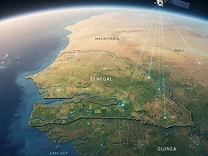
Senegal Is Building a Space Future. The Opportunity Is Bigger Than Satellites
Senegal's growing space ambitions could create opportunities far beyond satellites, from agriculture and climate resilience to research, entrepreneurship and high-skilled jobs. The bigger question is whether the country can build an ecosystem around them.
Guidance
Looking for guidance?
Connect with experienced Senegalese professionals across industries and continents.
Find a Mentor